
Consulting on Exeter College, Oxford's Quantum Innovation District (EXOq)
Consulting on Exeter College, Oxford's Quantum Innovation District (EXOq)
KOR Communications planned and delivered the pre-planning application engagement for EXOq, Exeter College's proposed new dynamic research and innovation compute environment, building on and enhancing Oxford's international reputation. The programme of engagement involved preparing all communication and engagement assets, building a dedicated project website, engaging local stakeholders and residents, hosting a three-day exhibition attended by more than 230 visitors and producing the Statement of Community Involvement.
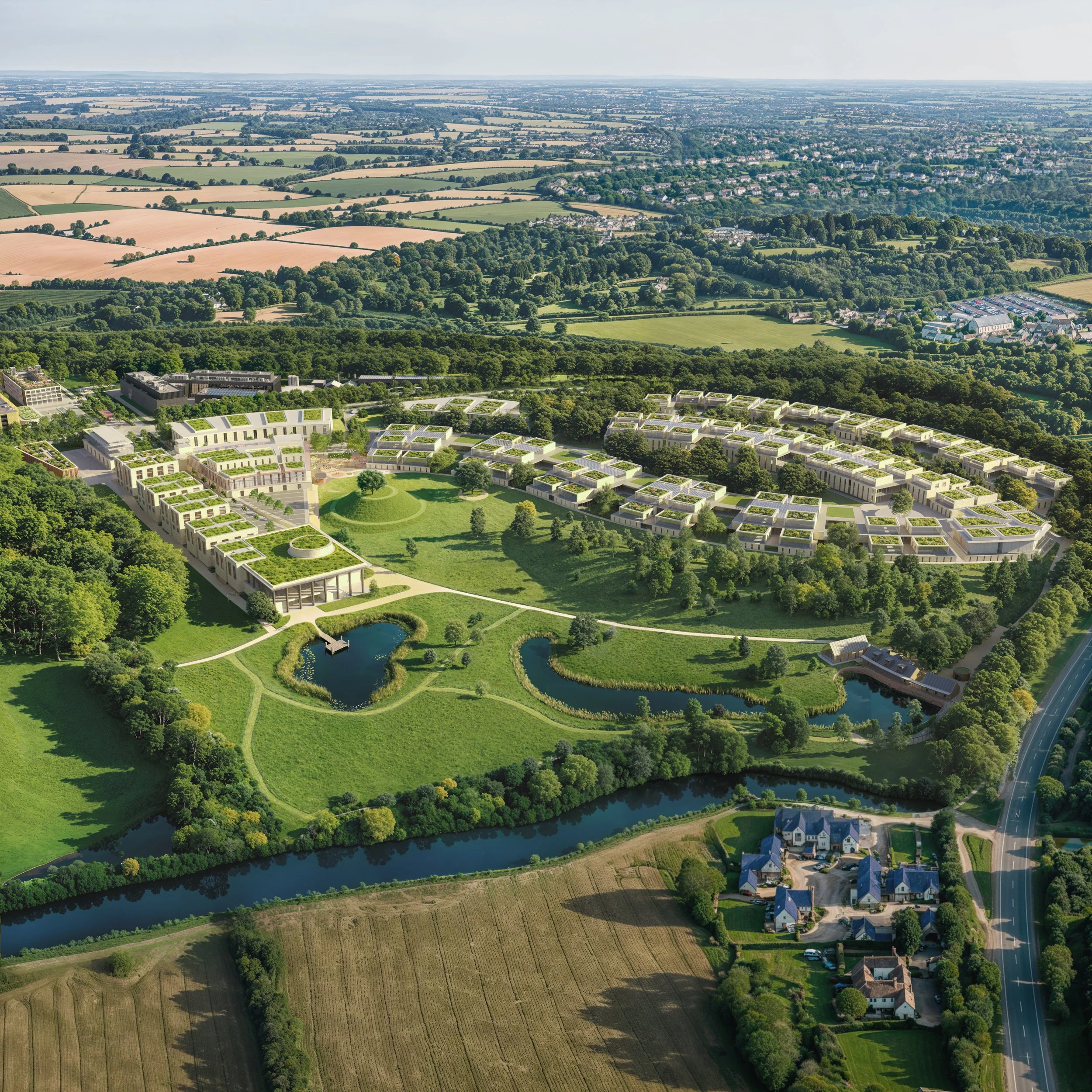
The project
Exeter College, Oxford, one of the University of Oxford's oldest colleges, brought forward plans for a dynamic research and innovation district, building on and enhancing Oxford's international reputation. At the centre of the proposals is Sovereign High-Performance Compute (HPC) infrastructure with new amenities, an innovation centre and a further education College, all set within parkland in a highly sustainable location on land owned by Exeter College in Cherwell District.
We were appointed by Exeter College to design and deliver the full programme of engagement, build and run the project website, raise awareness and gather feedback from the local community, manage all media relations and prepare the Statement of Community Involvement submitted alongside the planning application.
Our approach
The initial challenge was to explain the vision and purpose of the proposed innovation district to wide ranging audience groups locally, regionally and nationally. With other innovation districts already developed and in development in Oxford, it was crucial to distinguish this project, with its Sovereign High-Performance Compute (HPC) facility also offering quantum capacity, alongside an innovation centre in a highly connected location and set in parkland offering public access and opportunities to learn next generation skills at a new Further Education College also on site. These elements were captured in the project name EXOq – the Exeter Oxford Innovation District.
Once the narrative had been established, a comprehensive stakeholder mapping exercise identified local residents and neighbours to the site alongside four Members of Parliament, county, district and parish councils, and academic and industry institutions across Oxford. Our approach combined traditional and digital engagement tools, including the dedicated project website we built at exoq.co.uk, a three-day public exhibition in November 2025 and proactive media relations to raise awareness of the proposals.
The outcome
More than 230 visitors attended the exhibition and the consultation remained open online for a further three weeks with all 21 exhibition boards published on the project website, which received 4,800 visits and more than 110 pieces of feedback submitted in total.
In the lead up to the public exhibition and afterwards, we secured extensive media coverage and managed an on-site broadcast facility attended by the BBC.
Concerns about traffic, flood risk, energy use and the green belt were each addressed in the applicant's responses and recorded in the Statement of Community Involvement which was submitted alongside the outline planning application to Cherwell District Council, which now awaits determination.
-
Early engagement with the community is good practice for any data centre proposal, whatever the formal requirements, because these schemes raise genuine questions about energy, traffic, water and landscape that are better answered before an application is submitted than argued afterwards. For EXOq, KOR Communications worked with the project team to deliver a twelve-month engagement programme including a three-day public exhibition, and the feedback received was recorded in the Statement of Community Involvement submitted with the outline planning application.
-
Energy use, traffic and construction impacts, flood risk and water management, and landscape impact lead the list, ahead of noise or data security. At the consultation KOR Communications delivered for EXOq in Oxford, feedback-form respondents ranked traffic and construction impacts first, followed by flood risk and water management, with the energy use of High-Performance Compute close behind, and each concern was answered in the applicant's responses recorded in the Statement of Community Involvement.
-
By building the consultation around the explanation rather than treating it as background. For EXOq, KOR Communications sequenced 21 exhibition boards to open with the UK's compute capacity gap, move through "What is supercomputing?" and "Why is it important for Oxford?", and close with the parkland and travel links residents would use themselves, so people could respond to the proposals from an informed position.