COP31, the real climate work happens on the ground
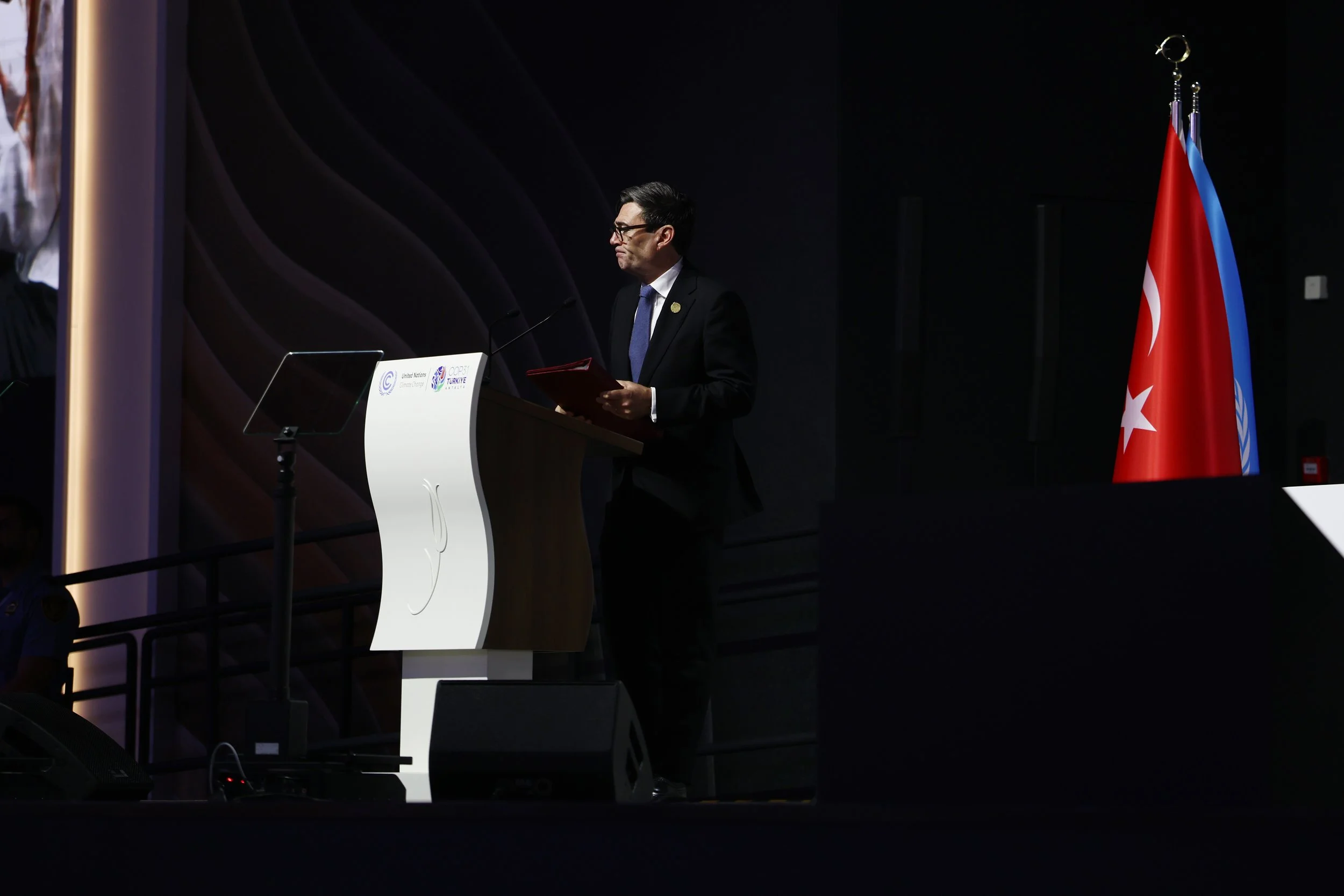
Andy Burnham at COP31//No.10 Flickr
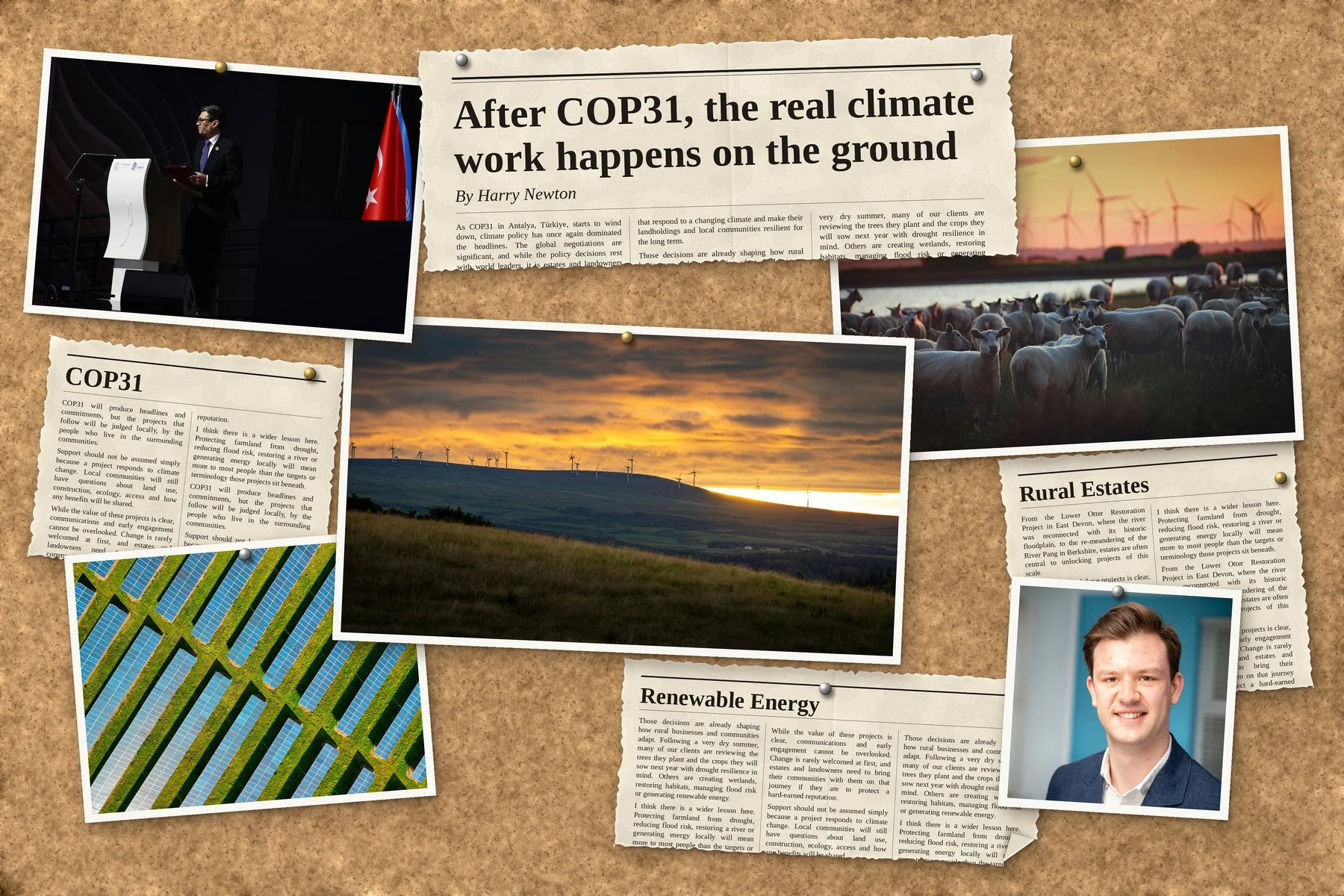
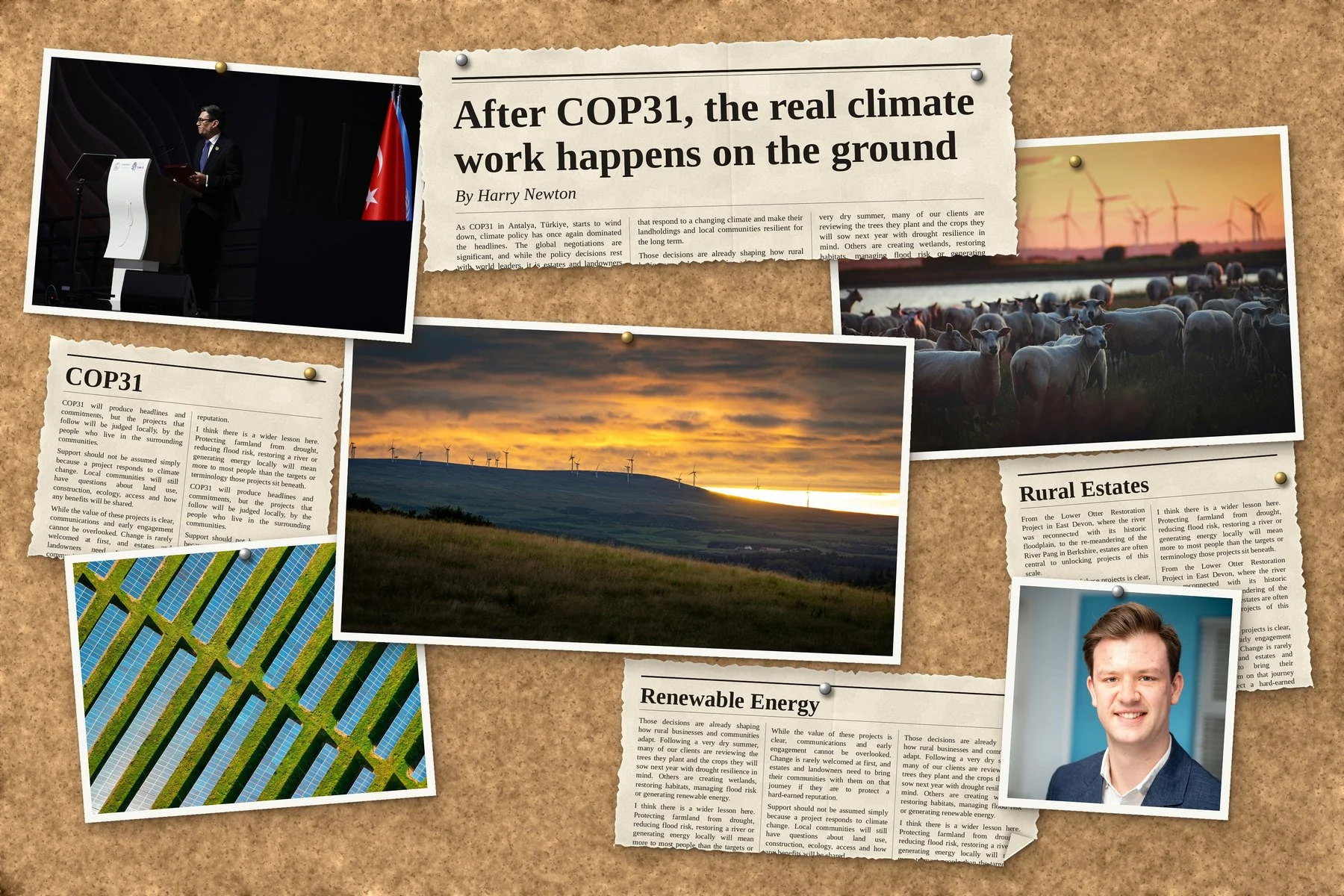
As COP31 in Antalya, Türkiye, starts to wind down, climate policy has once again dominated the headlines. The global negotiations are significant, and while the policy decisions rest with world leaders, it is estates and landowners who take the day-to-day decisions on land use that respond to a changing climate and make their landholdings and local communities resilient for the long term.
Those decisions are already shaping how rural businesses and communities adapt. Following a very dry summer, many of our clients are reviewing the trees they plant and the crops they will sow next year with drought resilience in mind. Others are creating wetlands, restoring habitats, managing flood risk or generating renewable energy.
While the value of these projects is clear, communications and early engagement cannot be overlooked. Change is rarely welcomed at first, and estates and landowners need to bring their communities with them on that journey if they are to protect a hard-earned reputation.
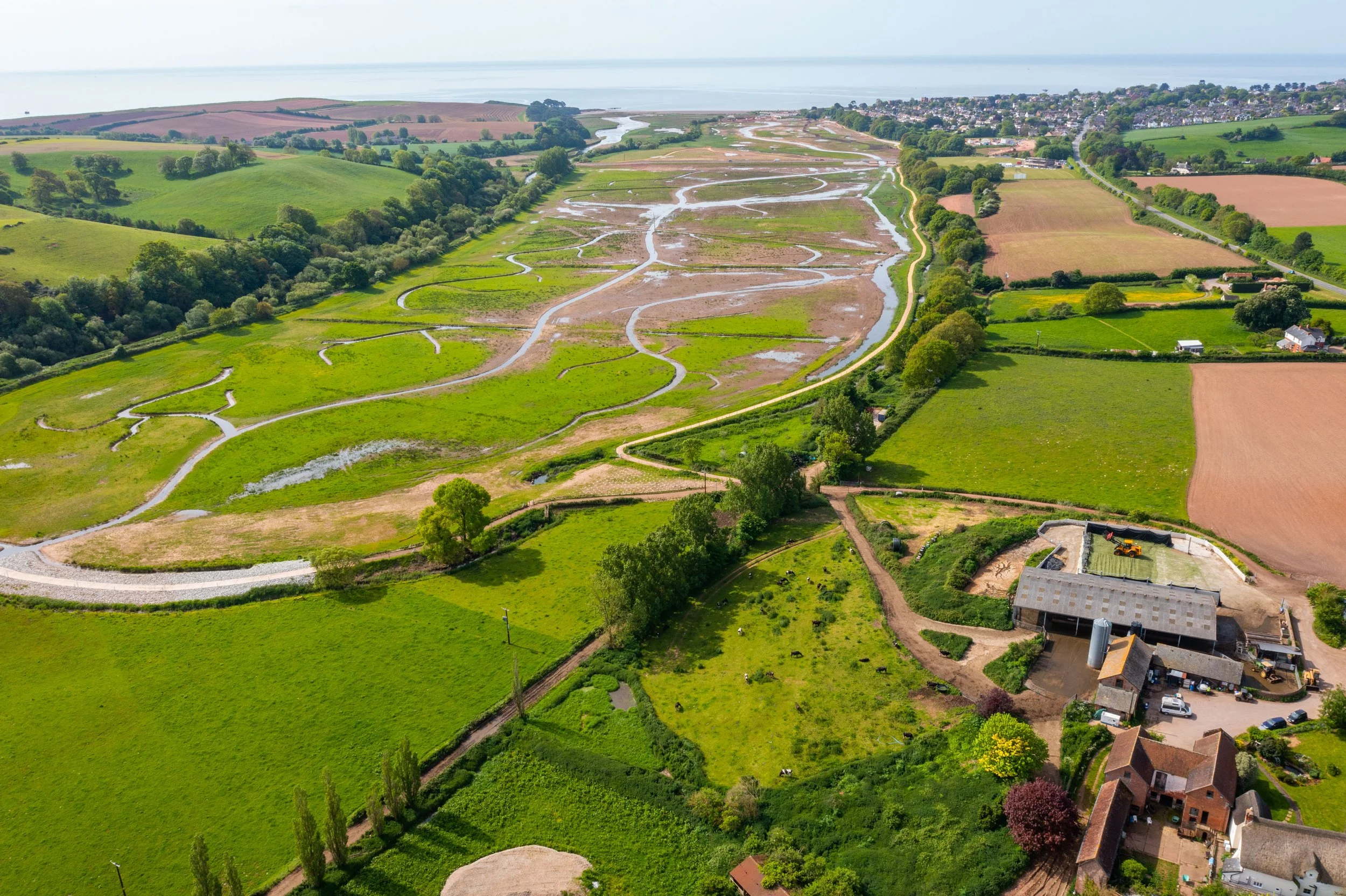
Aerial of The Lower Otter
The case for early engagement
Support should not be assumed simply because a project responds to climate change. Local communities will still have questions about land use, construction, ecology, access and how any benefits will be shared.
From the Lower Otter Restoration Project in East Devon, where the river was reconnected with its historic floodplain, to the re-meandering of the River Pang in Berkshire, estates are often central to unlocking projects of this scale.
They also show why engagement matters. For me, its value lies in helping estates understand what matters locally and giving these communities the opportunity to shape proposals.
Explaining what delivery means
A September 2026 report from the Energy Security and Net Zero Committee recommended that the Government place less emphasis on the phrase “net zero” in its public communications. It argued that the term has become politicised and disconnected from everyday priorities.
I think there is a wider lesson here. Protecting farmland from drought, reducing flood risk, restoring a river or generating energy locally will mean more to most people than the targets or terminology those projects sit beneath.
Changing the language alone will achieve little, however, if projects do not deliver benefits people can recognise. Estates need to explain what is proposed, why it is needed and what it will mean locally, including any difficult choices involved.
COP31 will produce headlines and commitments, but the projects that follow will be judged locally, by the people who live in the surrounding communities. Estates that bring these residents and stakeholders with them from the outset is therefore critical to delivering these projects smoothly, while protecting a reputation that has often taken generations to build.