100-acre solar farm approved ‘behind-closed-doors’
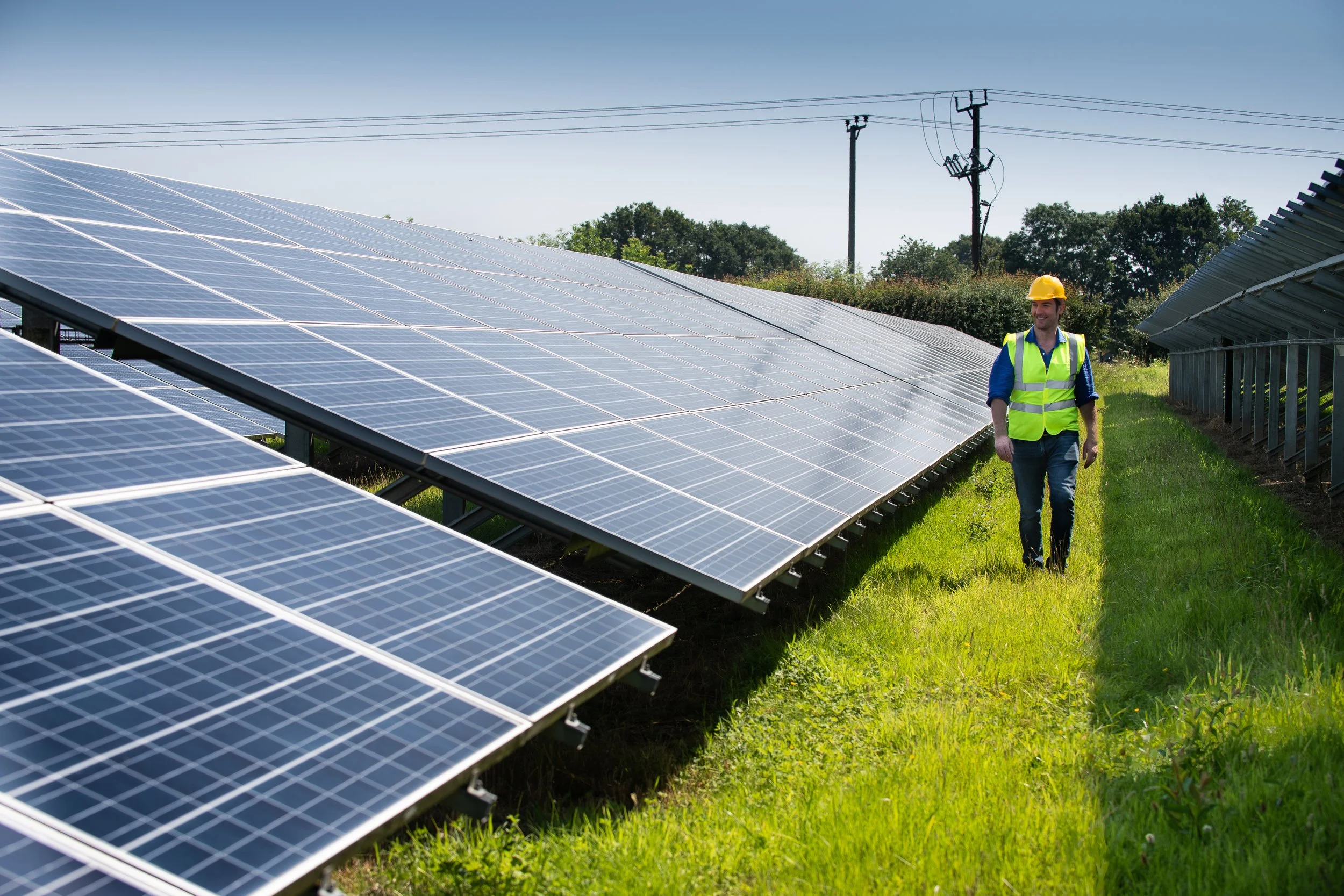
100-acre solar farm approved ‘behind-closed-doors’
I’ll admit it, I was intrigued by the online headline “Solar farm agreed behind closed doors.”
So, says Senior Public Affairs Consultant Andrew Howard, I clicked it. (Yes, I know, clickbait. Tell me off later).
The truth, of course, far from the shady deal the headline suggests, was that a perfectly decent proposal eventually proved so uncontroversial, and so policy-compliant, that a council’s planning officers were able to approve it under delegated powers this month (March 2026).
Keep calm and go by the book. That’s what paid off for the developers of the 44-hectare solar farm on low-grade farmland near the North Devon village of Braunton.
What the applicants did, in this case, was to follow planning procedure quite carefully, particularly around stakeholder engagement and consultation. For the avoidance of doubt, I’m not singing our own praises here - this is not an application we worked on ourselves.
The applicant consulted with all those affected at the very start of the process, listened to the feedback, amended the plans as a result and demonstrated that their scheme met the criteria as set down by local and national planning policies.
The application was determined by North Devon Council’s senior planning officers without the need for a debate by councillors because there was, essentially, nothing to debate.
The proposal, submitted by renewable energy developers Exagen, began with detailed community engagement, as required by planning legislation, and in line with advice from central Government and North Devon Council.
A project website was created to provide information about the plan, which was regularly updated and to which local residents and interested parties could – and did – respond. Site surveys by specialists including those in ecology, landscape, archaeology, flood risk, noise impact and agricultural land classification, were also commissioned.
A series of meetings with parish and district councillors, the closest neighbours to the site and other interested parties were held, followed by a public consultation event at Braunton village hall to which almost 900 households were invited. A few weeks later a second ‘drop-in’ consultation was held at the same venue.
Exagen reported: “The consultation events played a key role in gathering valuable feedback, which, along with the results of site surveys, informed subsequent refinements to the design.
“These insights helped shape a more comprehensive and well-informed proposal that better aligned with the needs and expectations of both the local community and relevant stakeholders.”
While a handful of objectors continued to oppose the plan, including CPRE Devon, those with the greatest interest in the site, including the parish council, many local residents, The Environment Agency and Natural England, raised no objections.
Just because CPRE Devon says that a plan is ‘controversial’ doesn’t mean that it is.
They are now claiming there is no need for this kind of project because solar panels must go on new build housing. I wonder if they would have supported a proposal for housing on the same site - complete with solar panels.
As the war in the Middle East puts the UK’s energy security under renewed pressure, the case for renewables grows. Given the perilous state of the world’s energy supply what better can we do than produce our own renewable energy?
Earlier this week there was a point when wind was producing 40% of our electricity, and solar 20%. That’s awesome news for the planet and for our country. That amount of energy hasn’t come off rooftops and it never will. We’re on the right track and mustn’t be derailed.
The lesson from this decision is clear. To reduce the risk that a plan will come unstuck developers and landowners need to follow procedure, choosing sites that closely match requirements laid down by planning policy and, crucially, following the process of community and stakeholder engagement, step-by-step. If that ends with a “behind-closed-doors” approval, then everything has gone to plan.
If you need advice and support with a renewable energy proposal, please contact KOR Communications who are experienced in managing all kinds of community and stakeholder engagement.